A kitchen sink that drains slowly or holds a pool of gray water is one of the most common calls we get across Miami-Dade, Broward, and Palm Beach — and it's also one of the most fixable without a plumber. The catch is that the two things most people reach for first, boiling water and a bottle of chemical drain cleaner, are exactly the two things that can turn a 20-minute fix into a pipe replacement. This guide walks through the way we actually clear a kitchen clog, in order, using tools you can buy for under $30.
Why South Florida kitchen drains clog in the first place
Almost every kitchen clog we open up is the same recipe: cooking grease that cooled and congealed on the pipe wall, then caught coffee grounds, rice, pasta, and food scraps until the opening narrowed to nothing. South Florida adds two wrinkles. Our hard water leaves mineral scale that gives grease more texture to cling to, and our warm slab temperatures keep that grease soft and sticky deeper into the line than it would be up north. That's why a sink that's drained fine for two years can go from slow to fully blocked in a week.
The other thing to skip: chemical drain cleaner
We understand the appeal — pour it in, walk away, hope it works. The problem is twofold. First, caustic cleaners (the lye-based ones) generate real heat as they react, and repeated use softens and weakens plastic pipe the same way trapped boiling water does. Second, if the cleaner doesn't fully clear the clog, you now have a pipe full of caustic liquid sitting on top of the blockage. The next person to open that trap — often us — gets a face full of it. If you've already poured cleaner in and it didn't work, tell your plumber before they start. It changes how we open the line.
What you'll need
- A flat-bottomed cup plunger (the kind without the rubber flap that folds out — that flap kind is for toilets)
- A bucket and some old towels
- Channel-lock pliers (most plastic P-traps loosen by hand, but metal ones need pliers)
- A bottle brush or an old toothbrush, plus a wire coat hanger or a $15 hand-crank drain snake
- Baking soda and white vinegar (optional, for grease)
- Rubber gloves
Step-by-step: the order we work in
- Clear the standing water. Bail out as much as you can with a cup so you're working with the drain, not a full basin. If you have a garbage disposal and the water is on that side, run the disposal for a few seconds first — sometimes the clog is just jammed disposal debris and that's the whole fix.
- Plunge it properly. Block the second drain in a double sink with a wet rag (and seal the dishwasher hose if you can reach it) so your pressure goes down the pipe, not sideways. Smear a little petroleum jelly on the plunger rim for a better seal, run enough water to cover the cup, and plunge firmly 10–15 times. Pull up sharply on the last stroke. Repeat two or three rounds before deciding it didn't work.
- Try baking soda and vinegar on grease clogs. If plunging loosened things but didn't finish the job, pour about half a cup of baking soda down the drain, follow with a cup of white vinegar, and cover the drain. Let it fizz for 15 minutes, then flush with hot tap water. This won't move a solid blockage, but it's genuinely effective at breaking down the greasy film that narrows a pipe.
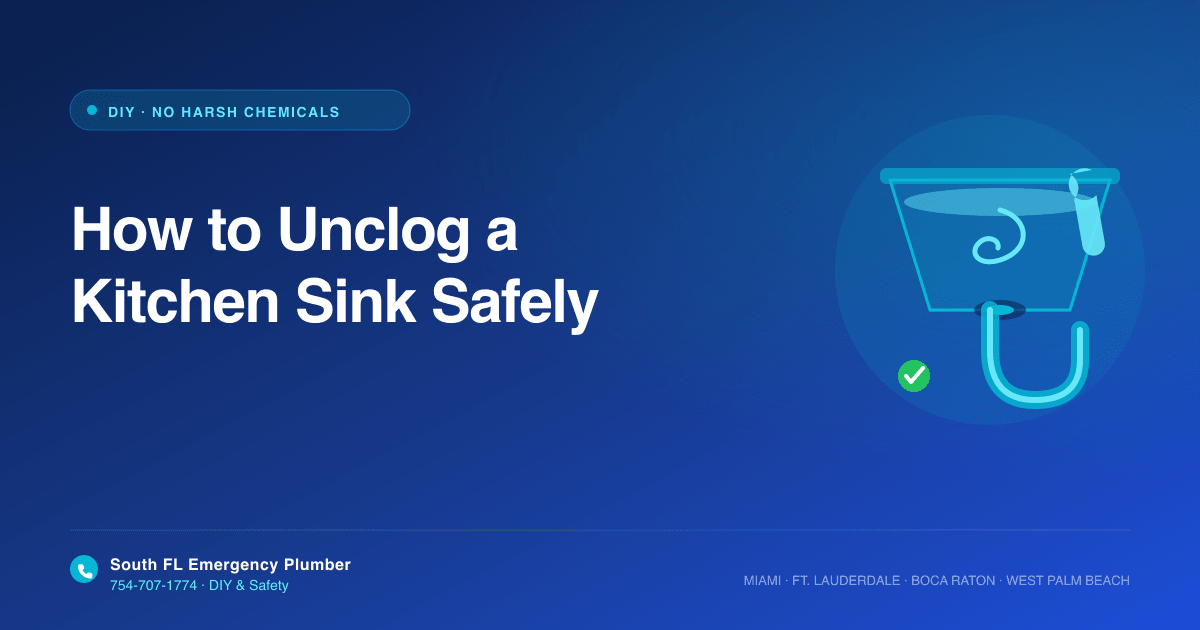
- Clean the P-trap. This is the step that fixes most clogs people think need a plumber. The P-trap is the U-shaped pipe under the sink, and it's where food and grease settle. Put a bucket under it, loosen the two slip nuts (by hand or with pliers), drop the trap into the bucket, and clear it out with a brush. Check the horizontal arm going into the wall too. Reassemble hand-tight, run water, and check for drips.
- Snake the line if the trap was clear. If you pulled a clean trap but the sink still won't drain, the clog is in the branch line inside the wall. Feed a hand-crank drain snake into the pipe stub in the wall, crank until you feel it bite the clog, work it back and forth, then withdraw it slowly. Run hot water to confirm the line is open.
Garbage disposal won't drain? Check this first
If the clogged side has a disposal and it only hums or does nothing, two quick checks come before any plunging. If it hums but won't spin, it's jammed — turn it OFF at the wall switch, and turn the blades manually with the hex (Allen) key that fits the slot on the bottom center of the unit. If it's completely dead, press the small red reset button on the underside. A disposal that resets and spins freely but still leaves water standing means the clog is downstream, in the trap or branch line — go back to the steps above.
What NOT to put down the drain (so this doesn't happen again)
- Cooking grease and oil — pour it into a can and trash it once it solidifies. This is the number-one cause of the clogs we open.
- Coffee grounds and eggshells — they settle and bind with grease into a cement-like sludge.
- Rice, pasta, and oatmeal — they keep swelling with water after they're down the pipe.
- Fibrous scraps — celery, onion skins, corn husks, and potato peels wrap around disposal blades and tangle in the trap.
- Flour and starches — they turn to paste the moment they hit standing water.
When to stop and call a plumber
DIY has a clear stopping point. Call us if: you pulled and cleaned the P-trap but the sink still backs up (the clog is deep in the branch or main line); both sides of a double sink fill up, or water rises in one side when you run the other; water backs up into a different fixture — the dishwasher, a nearby floor drain, or a bathroom — when you run the kitchen sink, which points to a main-line blockage, not a kitchen one; you smell sewage; or you see water leaking from the pipes under the sink after reassembly. Those are signs the problem is past the reach of a hand snake, and forcing it risks a bigger mess.
We clear kitchen and main-line clogs across Miami-Dade, Broward, and Palm Beach with proper drain machines and camera inspection when needed — and we do it without dumping chemicals into your pipes. If you've worked through the steps above and the sink still won't drain, or you'd rather not open the trap yourself, call 754-707-1774. We're available 24/7 for backups that won't wait until morning.
Need a Plumber Now?
24/7 service across Miami-Dade, Broward & Palm Beach. Same-day availability.